
 RETURN TO SEARCH RESULTS
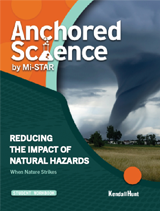
Anchored Science Unit 8.6: Reducing the Impact of Natural Hazards Student Workbook
Author(s): MICHIGAN TECHNOLOGICAL UNIVERSITY
Edition: 1
Copyright: 2026
Pages: 140
CHOOSE FORMAT
Anchored Science by Mi-STAR is a comprehensive middle school science curriculum driven by a bold vision for the future, where science isn’t just a subject but a powerful, integrated body of knowledge that equips students to tackle today’s pressing societal challenges. This curriculum harnesses the full potential of the Next Generation Science Standards, empowering students to actively engage with science and engineering practices. They’ll move beyond the classroom, using their skills to solve real-world problems, making learning both impactful and deeply relevant to their lives and the world around them.
Each unit delivers a NGSS-aligned assessment package that fully integrates tools to measure student progress and deepen their engagement with science. The Professional Learning program provides a dynamic range of flexible, ongoing opportunities, enabling teachers to not only master the unit content but also continually enhance their skills, while motivating and challenging their students.
Unit 8.6: Reducing the Impact of Natural Hazards , When Nature Strikes
In this unit, students take on the role of scientists who conduct a Hazard Assessment for one U.S. state. They use historical data to support a long-term forecast about which natural hazard is most likely to threaten the state. They investigate what causes the hazard and the damages associated with it. Based on this information, they identify technologies that the state could invest in to reduce the hazard’s negative effects on people and property.
Included with this purchase is a printed, perfect bound student workbook. The digital license for the Student eBook and digital resources are sold separately.
Lesson 1 What are natural hazards?
Lesson 2 Where do natural hazards happen?
Lesson 3 What causes natural hazards?
Lesson 4 Impacts of Natural Hazards
Lesson 5 Predicting the Big One
Lesson 6 Reducing the Dangers of Natural Hazards
Lesson 7 Culminating Experience
Unit Challenge Organizer
Unit Summary Table
Science Words
Career Connection
MICHIGAN TECHNOLOGICAL UNIVERSITY
Originally founded in 1885 as a Mining School, Michigan Technological University (Michigan Tech) is historically known for its presence in engineering research and technology development. Over the years, the university has expanded its offerings to more than 160 undergraduate and graduate degree programs in science, technology, engineering, mathematics, and related fields. It is one of the leading public research universities in the country. Mi-STAR was created in 2015 by teams of teachers, scientists, engineers, and curriculum designers through generous support provided by the Herbert H. and Grace A. Dow Foundation. Mi-STAR has also received substantial support from the National Science Foundation, the MiSTEM Advisory Council through the Michigan Department of Education, and Michigan Technological University.