
 RETURN TO SEARCH RESULTS
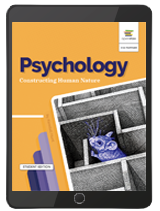
OpenStax K-12: Psychology Student 1 Year License
Author(s): OpenStax
Edition: 1
Copyright: 2026
Pages: 902
CHOOSE FORMAT
Kendall Hunt is proud to partner with OpenStax, the world’s largest nonprofit publisher and an initiative of Rice University, to deliver high-quality, affordable instructional resources for schools nationwide. Combining OpenStax’s trusted, research-based content with Kendall Hunt’s expertise in curriculum development, customization, and distribution, this partnership provides educators with flexible, standards-aligned learning solutions that engage students and support meaningful outcomes. The collaboration reflects a shared commitment to educational equity, innovation, and expanding access to exceptional learning experiences for all students.
Psychology provides a comprehensive exploration of core psychological concepts grounded in both foundational studies and current research. The program includes coverage of the DSM-5 when examining psychological disorders and highlights diverse perspectives, cultures, and communities to help students better understand human behavior and the evolving field of psychology.
Included in this purchase is 1 year access to the Student eBook and digital resources through our online platform, Flourish.
Chapter 1 Introduction to Psychology
- 1.1 What Is Psychology?
- 1.2 History of Psychology
- 1.3 Contemporary Psychology
- 1.4 Careers in Psychology
Chapter 2 Psychological Research
- 2.1 Why Is Research Important?
- 2.2 Approaches to Research
- 2.3 Analyzing Findings
- 2.4 Ethics
Chapter 3 Biopsychology
- 3.1 Human Genetics
- 3.2 Cells of the Nervous System
- 3.3 Parts of the Nervous System
- 3.4 The Brain and Spinal Cord
- 3.5 The Endocrine System
Chapter 4 States of Consciousness
- 4.1 What Is Consciousness?
- 4.2 Sleep and Why We Sleep
- 4.3 Stages of Sleep
- 4.4 Sleep Problems and Disorders
- 4.5 Substance Use and Abuse
- 4.6 Other States of Consciousness
Chapter 5 Sensation and Perception
- 5.1 Sensation versus Perception
- 5.2 Waves and Wavelengths
- 5.3 Vision
- 5.4 Hearing
- 5.5 The Other Senses
- 5.6 Gestalt Principles of Perception
Chapter 6 Learning
- 6.1 What Is Learning?
- 6.2 Classical Conditioning
- 6.3 Operant Conditioning
- 6.4 Observational Learning (Modeling)
Chapter 7 Thinking and Intelligence
- 7.1 What Is Cognition?
- 7.2 Language
- 7.3 Problem Solving
- 7.4 What Are Intelligence and Creativity?
- 7.5 Measures of Intelligence
- 7.6 The Source of Intelligence
Chapter 8 Memory
- 8.1 How Memory Functions
- 8.2 Parts of the Brain Involved with Memory
- 8.3 Problems with Memory
- 8.4 Ways to Enhance Memory
Chapter 9 Lifespan Development
- 9.1 What Is Lifespan Development?
- 9.2 Lifespan Theories
- 9.3 Stages of Development
- 9.4 Death and Dying
Chapter 10 Emotion and Motivation
- 10.1 Motivation
- 10.2 Hunger and Eating
- 10.3 Sexual Behavior
- 10.4 Emotion
Chapter 11 Personality
- 11.1 What Is Personality?
- 11.2 Freud and the Psychodynamic Perspective
- 11.3 Neo-Freudians: Adler, Erikson, Jung, and Horney
- 11.4 Learning Approaches
- 11.5 Humanistic Approaches
- 11.6 Biological Approaches
- 11.7 Trait Theorists
- 11.8 Cultural Understandings of Personality
- 11.9 Personality Assessment
Chapter 12 Social Psychology
- 12.1 What Is Social Psychology?
- 12.2 Self-Presentation
- 12.3 Attitudes and Persuasion
- 12.4 Conformity, Compliance, and Obedience
- 12.5 Prejudice and Discrimination
- 12.6 Aggression 12.7 Prosocial Behavior
Chapter 13 Industrial-Organizational Psychology
- 13.1 What Is Industrial and Organizational Psychology?
- 13.2 Industrial Psychology: Selecting and Evaluating Employees
- 13.3 Organizational Psychology: The Social Dimension of Work
- 13.4 Human Factors Psychology and Workplace Design
Chapter 14 Stress, Lifestyle, and Health
- 14.1 What Is Stress?
- 14.2 Stressors
- 14.3 Stress and Illness
- 14.4 Regulation of Stress
- 14.5 The Pursuit of Happiness
Chapter 15 Psychological Disorders
- 15.1 What Are Psychological Disorders?
- 15.2 Diagnosing and Classifying Psychological Disorders
- 15.3 Perspectives on Psychological Disorders
- 15.4 Anxiety Disorders
- 15.5 Obsessive-Compulsive and Related Disorders
- 15.6 Posttraumatic Stress Disorder
- 15.7 Mood and Related Disorders
- 15.8 Schizophrenia
- 15.9 Dissociative Disorders
- 15.10 Disorders in Childhood
- 15.11 Personality Disorders
Chapter 16 Therapy and Treatment
- 16.1 Mental Health Treatment: Past and Present
- 16.2 Types of Treatment
- 16.3 Treatment Modalities
- 16.4 Substance-Related and Addictive Disorders: A Special Case
- 16.5 The Sociocultural Model and Therapy Utilization
Glossary
Index
Image Credits
OpenStax
OpenStax is a nonprofit based at Rice University, committed to improving student learning and access to education. Our openly licensed textbooks are written and peer-reviewed by subject matter experts and meet the scope and sequence requirements of their respective college courses. Unlike traditional textbooks, OpenStax books are available for free and are always up to date online. Each book comes with optional low-cost resources from our partners as well as completely free instructor and student ancillaries. With the support of our philanthropic partners, OpenStax is empowering students and instructors by breaking down the most common barriers to learning.