
Search Listing Name
product:
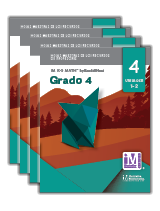
Illustrative Mathematics: Grade 4 Spanish Teacher Resource Copy Master Set
Illustrative Mathematics K-5 MathTM is an IM Certified product providing trusted, highly rated materials to ensure students thrive in mathematics. Each Illustrative Mathematics lesson has four phases, from pre-unit practice modules to cool downs, focusing students’ attention on definitions, notations, and graphical conventions contributing to the development of real numbers.
The big ideas in
product:
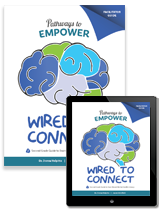
Pathways to Empower: Grade 2 Wired to Connect Facilitator Guide + 1 Year License
The Pathways to Empower elementary collection of sequential teacher resources begins with an engaging look at neuroscience, helping students build a strong understanding of how their brains work. That knowledge then comes to life through lessons on social relationships and the four key parts of mental health literacy. Each grade-level resource offers evidence-based strategies to strengthen resilience, encourage connection, and promote positive mental health in a fun and meaningful way.
Grade 2: Wired to Connect
Our brains are wired to respo

product:
Illustrative Mathematics: Integrated Math 2 Manipulative Kit
Extend hands-on math learning in your classroom with aligned manipulative kits for the Illustrative M
product:
Navigator Heritage Series: Little Women Novel Study Guide 1 Year License
This story follows the four March girls---Meg, Jo, Beth, and Amy---through their lives during and after the Civil War. Through Louisa May Alcott’s seamless writing and detailed descriptions, readers learn about the daily in’s and out’s of life in mid-1900s New England. Their audience shares in the joys, the laughter, the catastrophes, and the sorrow of the March family, getting to know each girl and their family and friends. However, this heartwarming classic is more than a historical tale or a series of moral lessons. Alcott’s style represents a genre of American literature that is both op
product:
Project M3: Level 4-5: Treasures from the Attic: Exploring Fractions Teacher 3 Year License
This unit provides an introduction to fractions, focusing on the meaning of mathematical operations in contextual situations rather than learning algorithms to perform computations. Students will learn the relative sizes of fractions and make estimates based on their mathematical thinking when ordering, comparing, adding, subtracting, multiplying or dividing two or more fractions.
The Teacher Guide<
product:
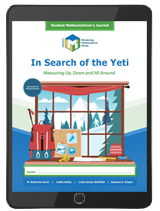
Project M3: Level 3-4: In Search of the Yeti: Measuring Up, Down and All Around Student Mathematician's Journal 1 Year License
The Student Mathematician’s Journal allows students to explore simulated or real-life problems and help them to think, write, and read like mathematicians. It encourages students to reflect on what they have learned in each lesson, think deeply about mathematics, and communicate in writing on worksheets.
In this unit on measurement, students actively engage in the measurement process to co
product:
Project A3: Awesome Advanced Activities for Mentoring Mathematical Minds Level 5-6 Teacher Guide + 3 Year License
Level 5–6 is divided into three activity sections: algebra, proportional reasoning, and integer activities. Each section begins with an Anchor Activity followed by five or six further explorations and extensions that are connected in some way to the Anchor.
Adventures in Algebra focuses on describing patterns and relationships with symbols and evaluating expressions and e