
Search Listing Name
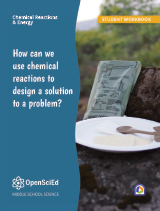
product:
OpenSciEd Unit 7.2: Chemical Reactions (B) & Energy Student Workbook
OpenSciEd Middle School science program addresses all middle school NGSS standards. This comprehensive science curriculum empowers students to question, design, investigate, and solve the world around them.
- Phenomenon Based - Centered around exploring phenomena or solving problems
- Driven by Student Questions - Storyline based on students’ questions and ideas
- Grounded in Evidence - Incremental building and revision of ideas based on evidence
- Collaborative - class and teacher figure
product:
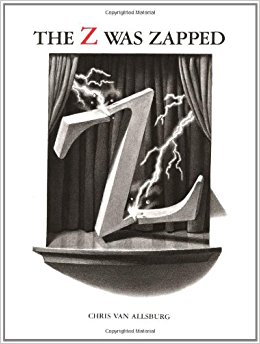
Worldly Words: Systems of Language Student Literature Workbook
Have you ever wondered about the letters and words we use in talking and writing? What did people do before there were letters? Why are there only 26 letters in English? Often you are unaware that your questions drive your curiosity and exploration into language and communication. In this unit, your job is to decipher (figure out) the patterns, similarities, and differences of letters, word families and origins, sounds, and languages. Why are there so many languages in our world? Human language is unique and may help you to think in a different way as you explore the amazing variety o
product:
Navigator Heritage Series: Bud, Not Buddy Study Guide 1 Year License
Bud, Not Buddy, a Newberry Medal Winner, is a dynamic story about the experiences of a young African American boy growing up in Michigan during the Great Depression. Students will venture into the story’s plot as Bud shares his insights on life and learning as he meets and interacts with many different people suffering the effects of the Depression. Bud’s mother has been dead for several years, and he has been living in orphanages and foster homes since her death. Now ten years old, Bud runs away to try to find the man he believes to be his father, a bandleader w
product:
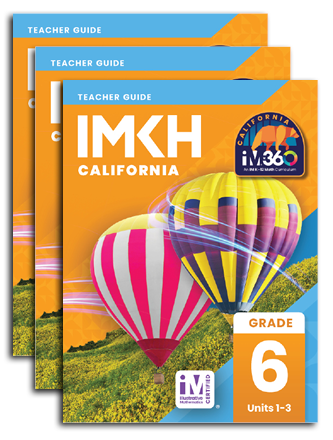
IMKH California: Grade 6 Teacher Guide Set
IMKH California, an IM® v.360 math curriculum, is problem-based and builds strong classroom math communities. It gives students a clear progression of concepts and helps teachers deepen their understanding of math and student thinking.
The curriculum encourages collaboration and meaningful mathematical conversations, highlighting Big Ideas, Major Concepts, and Mathematical Practices, while integrating Environmental Principles & Concepts and supports for MLL, ELD, and EL students.
product:
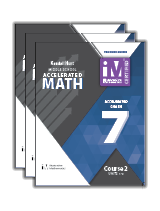
Illustrative Mathematics: Accelerated Course 2 Teacher Edition Set
IM 6–8 MathTM Accelerated, a compressed version of IM 6–8 Math™ 3.1415, is a thoughtful alternative to conventional accelerated programs because its design eliminates the possibility for unfinished learning as students arrive at Algebra 1. It includes all of the standards in IM 6–8 Math and compacts them into a two-year curriculum meant to be covered during the 6th and 7th grades. The pace is faster than IM 6-8 Math, but no crucial mathematical concepts are missed.
product:
Nuclear Energy: Friend or Foe?: Examining Nuclear Power from a Systems Perspective
This unit for grades 6-8 creatively explores the effects of nuclear power waste. The topic is introduced through the eyes of the mayor of a town where a nuclear power plant is located. She must decide if the facility can expand its waste disposal techniques. What are the biological implications of radiation? What are the trade-offs with which society must live as we accept nuclear technologies into our lives? These questions are answered by students as they prepare to make recommendations about the use of the nuclear power plant in their f
product:
Courage: Connections and Reflections Teacher Guide 1 Year License
For grades 7-8, this unit offers students the chance to compare and contrast their own lives with those of others. The unit explores social and historical issues by studying people, historical time periods and events, and students’ own lives. Novels, short stories, poetry, art, and music will be the avenues for addressing unit goals. Students will be given numerous opportunities for reading, writing, listening, and speaking.