Search Listing Name
product:
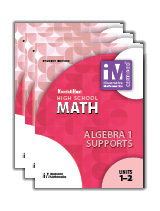
Illustrative Mathematics: Algebra I Supports Student Edition Set
Students who struggle in Algebra 1 are more likely to struggle in subsequent math courses and experience more adverse outcomes. The Algebra 1 Extra Support Materials are designed to help students who need additional support in their Algebra 1 course.
Each Algebra 1 Extra Support Materials lesson is associated with a lesson in the Algebra 1 course. The intention is that students experience each lesson before its associated Algebra 1 lesson. The extra support lessons help students lea
product:
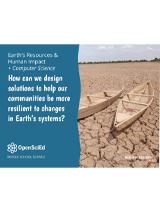
OpenSciEd Unit 8.5: Genetics Spanish Student Edition
OpenSciEd Middle School science program addresses all middle school NGSS standards. This comprehensive science curriculum empowers students to question, design, investigate, and solve the world around them.
- Phenomenon Based - Centered around exploring phenomena or solving problems
- Driven by Student Questions - Storyline based on students’ questions and ideas
- Grounded in Evidence - Incremental building and revision of ideas based on evidence
- Collaborative - class and teacher figure
product:
Mind Over Matter: Exploring Critical Thinking Skills
This curriculum is designed to collect data, analyze data, search for the truth, and think for themselves. This curriculum is also designed to support the social and emotional needs of today’s teen. Socially, this curriculum helps students and teachers build relationships with specifically designed interactions, activities, and lessons. Positive social interactions require healthy relationships. This curriculum is designed to get students talking to one another by using strategies targeting teamwork, collaboration, compassion, and empathy. Emotionally, students learn strategies to talk abou
product:
IM: Grade 4 Bundle Center Kit - Spanish
To help educators save time, IM-aligned center kits provide all the printed resources to improve teaching efficiency and enhance student learning!
The Grade 4 Spanish Bundle Center Kit includes pre-cut game boards, recording sheets, and center & lessons card decks.
For a detailed list, plea
product:
OpenSciEd Physics + Earth & Space Unit 6: Stars & the Big Bang Consumable Kit
Extend hands-on science learning in your classroom with aligned manipulative k