
Search Listing Name

product:
Ender's Game Tradebook
In order to develop a secure defense against a hostile alien race's next attack, government agencies breed child geniuses and train them as soldiers. A brilliant young boy, Andrew "Ender" Wiggin lives with his kind but distant parents, his sadistic brother Peter, and the person he loves more than anyone else, his sister Valentine. Peter and Valentine were candidates for the soldier-training program but didn't make the cut--young Ender is the Wiggin drafted to the orbiting Battle School for rigorous military tra
product:
Kalilah Adventures: Kalilah Goes Shoe Hunting
Kalilah’s adventures in her new home are just beginning! Join her on her mission to bring her favori
product:
OpenSciEd Grade 1 Unit 2: Waves (Sound) Student Workbook
The OpenSciEd elementary science program al
product:
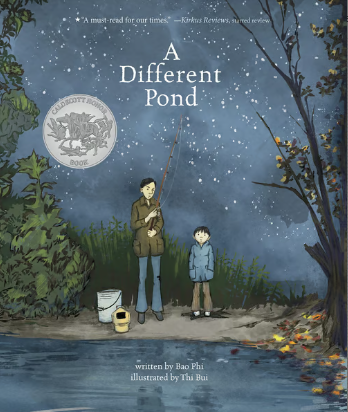
A Different Pond Tradebook
As a young boy, Bao Phi awoke early, hours before his father's long workday began, to fish on the shores of a small pond in Minneapolis. Unlike many other anglers, Bao and his father fished for food, not recreation. A successful catch meant a fed family. Between hope-filled casts, Bao's father told him about a different pond in their homeland of Vietnam.
Author: Bao Phi
Illustrated by: Thi Bui<

product:
Anchored Science Unit 8.4: Forces of Gravity in Solar System Motions Student Workbook
Anchored Science by Mi-STAR is a comprehensive middle school science curriculum driven by a bold vision for the future, where science isn’t just a subject but a powerful, integrated body of knowledge that equips students to tackle today’s pressing societal challenges. This curriculum harnesses the full potential of the Next Generation Science Standards, empowering students to actively engage with science and engineering practices. They’ll move beyond the classroom, using their skills to solve