
Search Listing Name
product:
Ancient Egypt: Gift of the Nile Student Guide 1 Year License
Ancient Egypt: Gift of the Nile Student Guide New!
Grades 2-3
This unit is designed around the idea that human civilizations develop and sustain themselves as a collection of interdependent systems. The civilization of ancient Egypt forms the central content of the unit, with exploration of systems of agriculture, economics, language, and leadership in this anci
product:
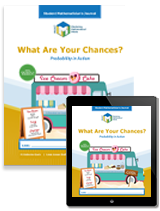
Project M3: Level 5-6: What Are Your Chances?: Probability in Action Student Mathematician's Journal + 1 Year License
The Student Mathematician’s Journal allows students to explore simulated or real-life problems and help them to think, write, and read like mathematicians. It encourages students to reflect on what they have learned in each lesson, think deeply about mathematics, and communicate in writing on worksheets.
In this unit, students begin their exploration of probability as a measurement of the
product:
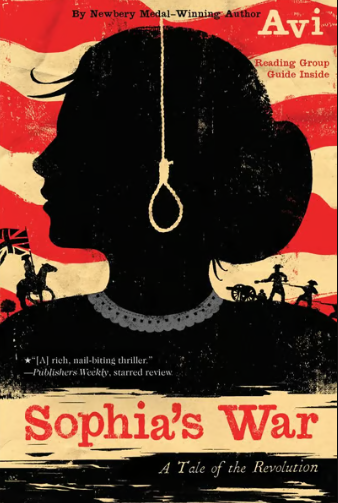
Navigator Heritage Series: Everything on a Waffle Novel Study Guide 1 Year License
Everything on a Waffle is a Newberry Honor Book that tells the story of Primrose Squarp, an 11-year-old girl living in a small town in British Columbia. When her parents disappear at sea during a storm, Primrose is convinced that they are still alive and stranded somewhere, but everyone else in town is sure that they are dead. The novel, told in the first person, focuses on Primrose’s life in the months after her parents’ disappearance. She moves from the home of a local babysitter to live with her energetic Uncle Jack and then to a foster home, finding frie
product:
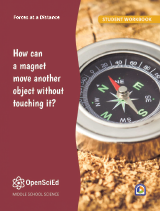
OpenSciEd Unit 8.3: Forces at a Distance Student Workbook
OpenSciEd Middle School science program addresses all middle school NGSS standards. This comprehensive science curriculum empowers students to question, design, investigate, and solve the world around them.
- Phenomenon Based - Centered around exploring phenomena or solving problems
- Driven by Student Questions - Storyline based on students’ questions and ideas
- Grounded in Evidence - Incremental building and revision of ideas based on evidence
- Collaborative - class and teacher figure