
Search Listing Name
product:
Project A3: Awesome Advanced Activities for Mentoring Mathematical Minds Level 5-6 Student Mathematician's Journal
The Student Mathematician’s Journal is a unique feature of our Project A3 series. It is modeled after the successful use of these journals in our award-winning Project M3 series. In these journals, the students are asked to reflect on what they have learned and write about it.
Level 5–6 is divided into three activity sections:
product:
OpenSciEd Chemistry + Earth & Space Unit 3: Molecular Processes in Earth Systems Teacher Edition
OpenSciEd High School addresses all high school NGSS standards. This comprehensive science curriculum empowers students to question, design, investigate, and solve the world around them.
- Phenomenon Based - Centered around exploring phenomena or solving problems
- Driven by Student Questions - Storyline based on students’ questions and ideas
- Grounded in Evidence - Incremental building and revision of ideas based on evidence
- Collaborative - class and teacher figure out ideas together
product:
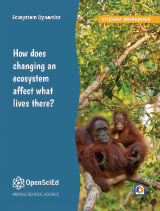
OpenSciEd Unit 7.5: Ecosystem Dynamics Student Workbook
OpenSciEd Middle School science program addresses all middle school NGSS standards. This comprehensive science curriculum empowers students to question, design, investigate, and solve the world around them.
- Phenomenon Based - Centered around exploring phenomena or solving problems
- Driven by Student Questions - Storyline based on students’ questions and ideas
- Grounded in Evidence - Incremental building and revision of ideas based on evidence
- Collaborative - class and teacher figure
product:
Project M2 Level 2 Unit 3: Shopping at the Bazaar: Connecting Number and Algebra with the Meerkats Kit
The kit includes the following:
- Ziploc sandwich bags, 50/box
- Centimeter graph paper, 8.5 x 11 cm, 100/pkg
- 5 sets of colored pencils, 12/set
- Blank cubes with labels, 36/set
- Index cards, 100/pkg
- 3 sets of marbles, 50/set
- Black pipe cleaners, 100/pkg
- 3 plastic ruler sets, 6/set
- 2 solid counting chip sets, 200/set
- 2 rainbow color tile sets, 400/set
- Storage tub with lid
- Game cards & Mula money, 1 pack, includes below:
product:
OpenSciEd Grade 2 Unit 2: Matter Non-Consumable Kit
This unit specific non-consumable kit includes items tha
product:
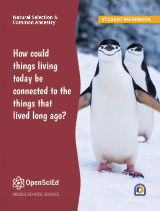
OpenSciEd Unit 8.6: Natural Selection & Common Ancestry Student Workbook
OpenSciEd Middle School science program addresses all middle school NGSS standards. This comprehensive science curriculum empowers students to question, design, investigate, and solve the world around them.
- Phenomenon Based - Centered around exploring phenomena or solving problems
- Driven by Student Questions - Storyline based on students’ questions and ideas
- Grounded in Evidence - Incremental building and revision of ideas based on evidence
- Collaborative - class and teacher figure