
Search Listing Name
product:
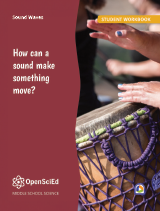
OpenSciEd Unit 8.2: Sound Waves Student Workbook
OpenSciEd Middle School science program addresses all middle school NGSS standards. This comprehensive science curriculum empowers students to question, design, investigate, and solve the world around them.
- Phenomenon Based - Centered around exploring phenomena or solving problems
- Driven by Student Questions - Storyline based on students’ questions and ideas
- Grounded in Evidence - Incremental building and revision of ideas based on evidence
- Collaborative - class and teacher figure


product:
Project M3: Level 5-6: What Are Your Chances? Probability in Action Teacher Guide + 3 Year License
In this unit, students begin their exploration of probability as a measurement of the likelihood of events. The unit was designed to engage students as mathematicians conducting and analyzing experiments that involve the likelihood of events happening.They will see how mathematics is used in real-life situations as they create a “Carnival of Chance” using games constructed with the laws of probability.
The&n
product:
OpenSciEd Unit 7.5: Ecosystem Dynamics Teacher Edition
OpenSciEd Middle School science program addresses all middle school NGSS standards. This comprehensive science curriculum empowers students to question, design, investigate, and solve the world around them.
- Phenomenon Based - Centered around exploring phenomena or solving problems
- Driven by Student Questions - Storyline based on students’ questions and ideas
- Grounded in Evidence - Incremental building and revision of ideas based on evidence
- Collaborative - class and teacher figure
product:
OpenSciEd Grade 5 Unit 1: Ecosystems & Matter Cycling Non-Consumable Kit
This unit specific non-consumable kit includes items tha
