
Search Listing Name
product:
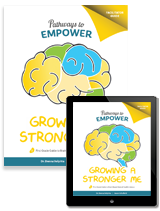
Pathways to Empower: Grade 1 Growing A Stronger Me Facilitator Guide + 1 Year License
The Pathways to Empower elementary collection of sequential teacher resources begins with an engaging look at neuroscience, helping students build a strong understanding of how their brains work. That knowledge then comes to life through lessons on social relationships and the four key parts of mental health literacy. Each grade-level resource offers evidence-based strategies to strengthen resilience, encourage connection, and promote positive mental health in a fun and meaningful way.
Grade 1: Growing a Stronger Me
Resilience is the number
product:
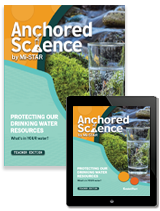
Anchored Science Unit 7.5: Protecting Our Drinking Water Resources Teacher Edition + 3 Year License
Anchored Science by Mi-STAR is a comprehensive middle school science curriculum driven by a bold vision for the future, where science isn’t just a subject but a powerful, integrated body of knowledge that equips students to tackle today’s pressing societal challenges. This curriculum harnesses the full potential of the Next Generation Science Standards, empowering students to actively engage with science and engineering practices. They’ll move beyond the classroom, using their skills to solve
product:
Golden Jungle
During a highly secretive mission over the Amazon Rainforest, a state-of-the-art cargo plane loses communication and goes down in the jungle. Concerned for the safety of the pilots as well as trying to retrieve the classified shipment of a synthetic narcotic seized by the DEA, the head of the Van Baron company turns to his three close friends to find the aircraft before anyone knows it’s missing. Driven by a sense of honor and duty, documentary filmmaker and college professor Cal Bailey and his two best friends
product:
OpenSciEd Physics + Earth & Space Unit 2: Energy, Forces & Earth's Crust Student Edition
OpenSciEd High School addresses all high school NGSS standards. This comprehensive science curriculum empowers students to question, design, investigate, and solve the world around them.
- Phenomenon Based - Centered around exploring phenomena or solving problems
- Driven by Student Questions - Storyline based on students’ questions and ideas
- Grounded in Evidence - Incremental building and revision of ideas based on evidence
- Collaborative - class and teacher figure out ideas together