Search Listing Name
product:
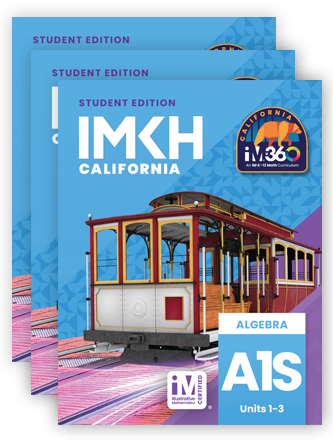
IM v.360: Integrated Math 2 Student Edition Set
IM® v.360 9-12 Math is an IM Certified curriculum providing t
product:
Illustrative Mathematics: Grade 5 Student Edition Set
Illustrative Mathematics K-5 MathTM is an IM Certified product providing trusted, highly rated materials to ensure students thrive in mathematics. Each Illustrative Mathematics lesson has four phases, from pre-unit practice modules to cool downs, focusing students’ attention on definitions, notations, and graphical conventions contributing to the development of real numbers.
The big ideas in
product:
Joan Joyce: La Chica Maravilla
Joan Joyce es considerada por muchos como la Mejor Atleta Femenina en la Historia del Deporte. Inducido en un amazing 21 Halls of Fame, Joan protagonizó un nivel muy alto en Softbol, Baloncesto, “Power” Voleibol, Golf y Bowling. ¡Joan fue árbitro (34 años), Entrenador de Golf de la Universidad (18 años), exitoso Entrenador de Softbol de la FAU (casi 30 años) y entrenador general durante más de 60 años! Ponchó a Ted Williams (varias ocasiones), Hank Aaron y otros grandes de la MLB. ¡Su record profesional de golf
product:
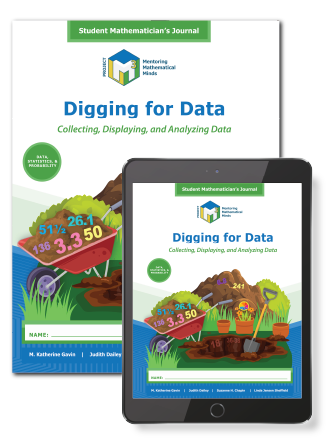
Project M3: Level 3-4: Digging for Data: Collecting, Displaying and Analyzing Data Student Mathematician's Journal + 1 Year License
The Student Mathematician’s Journal allows students to explore simulated or real-life problems and help them to think, write, and read like mathematicians. It encourages students to reflect on what they have learned in each lesson, think deeply about mathematics, and communicate in writing on worksheets.
In this unit, students will gather, represent and analyze data as the essence of good research to understand their world.
Included in this purchase is a printed Student Mathematician's Journal and 1-year access to the&n
product:
What a Find!: Analyzing Natural and Cultural Systems
What an appropriate title for an exploration of the field of archaeology! In this award-winning unit for grades 2-4, students are put in the role of junior archeologists at a research museum and discover that construction work has been halted on a new school because historic artifacts were discovered. To determine whether or not the dig is important enough to halt building the school entirely, students learn to excavate and actually conduct the dig -- carefully seeded with "historic artifacts."