
Search Listing Name
product:
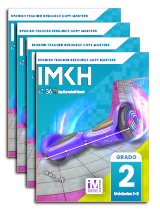
IM v.360: Grade 2 Spanish Teacher Resource Copy Master Set
IM® v.360 K-5 Math is an IM Certified curriculum providing trusted, highly rated materials to ensure students thrive in mathematics. Each Illustrative Mathematics lesson has four phases, from pre-unit practice modules to cool downs, focusing students’ attention on definitions, notations, and graphical conventions contributing to the development of real numbers.
Grade 2
The big ideas in grade 2 include: extending understanding of the base-ten number system, building fluency with addition and subtraction, using standard units of mea
product:
OpenSciEd Unit 6.1: Light & Matter Spanish Student Edition
OpenSciEd Middle School science program addresses all middle school NGSS standards. This comprehensive science curriculum empowers students to question, design, investigate, and solve the world around them.
- Phenomenon Based - Centered around exploring phenomena or solving problems
- Driven by Student Questions - Storyline based on students’ questions and ideas
- Grounded in Evidence - Incremental building and revision of ideas based on evidence
- Collaborative - class and teacher figure
product:
Mia and the Dragonfly
This enchanting story follows a young girl named Mia as she embarks on an adventure to find a butter
product:
Courage: Connections and Reflections Teacher Guide 1 Year License
For grades 7-8, this unit offers students the chance to compare and contrast their own lives with those of others. The unit explores social and historical issues by studying people, historical time periods and events, and students’ own lives. Novels, short stories, poetry, art, and music will be the avenues for addressing unit goals. Students will be given numerous opportunities for reading, writing, listening, and speaking.